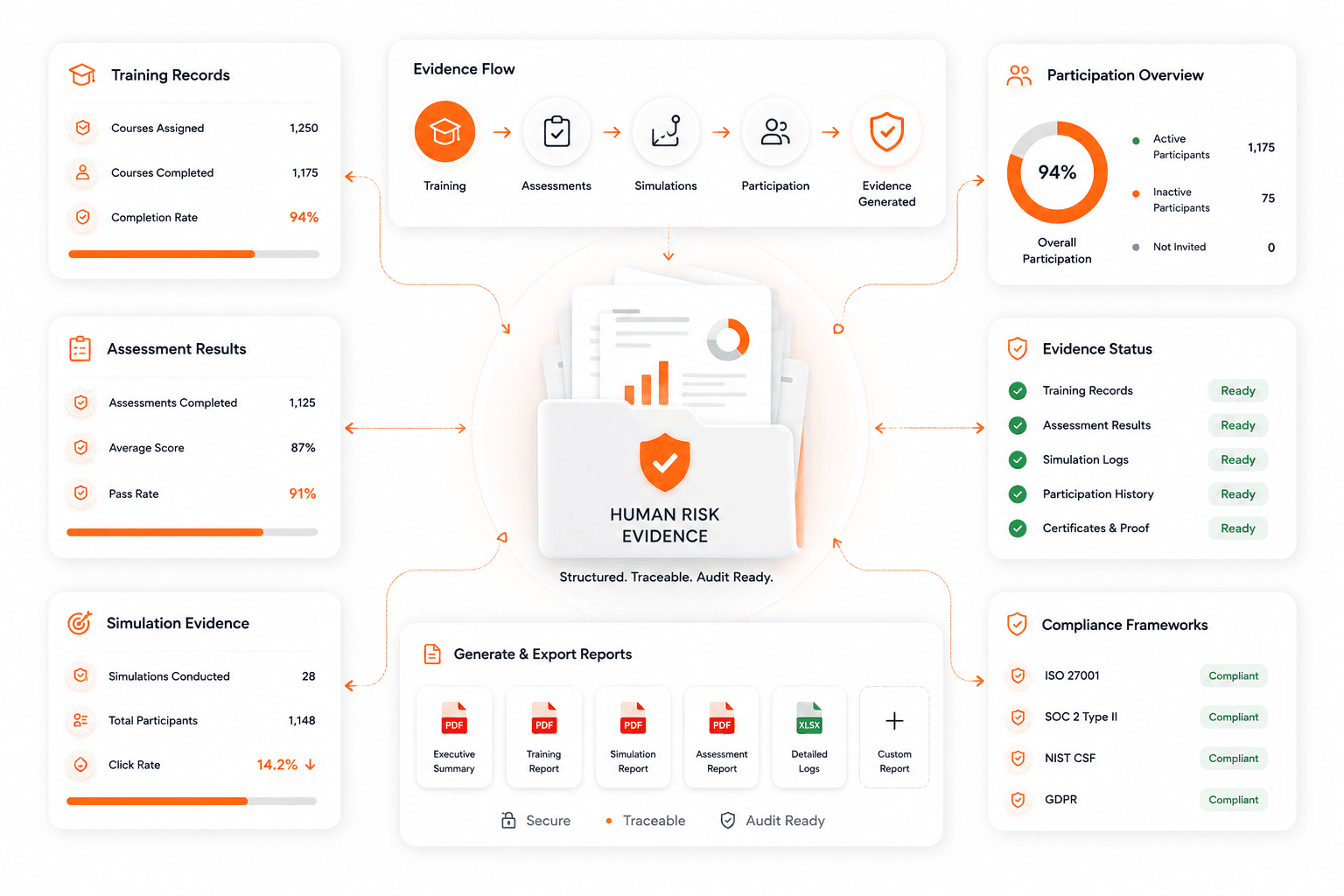
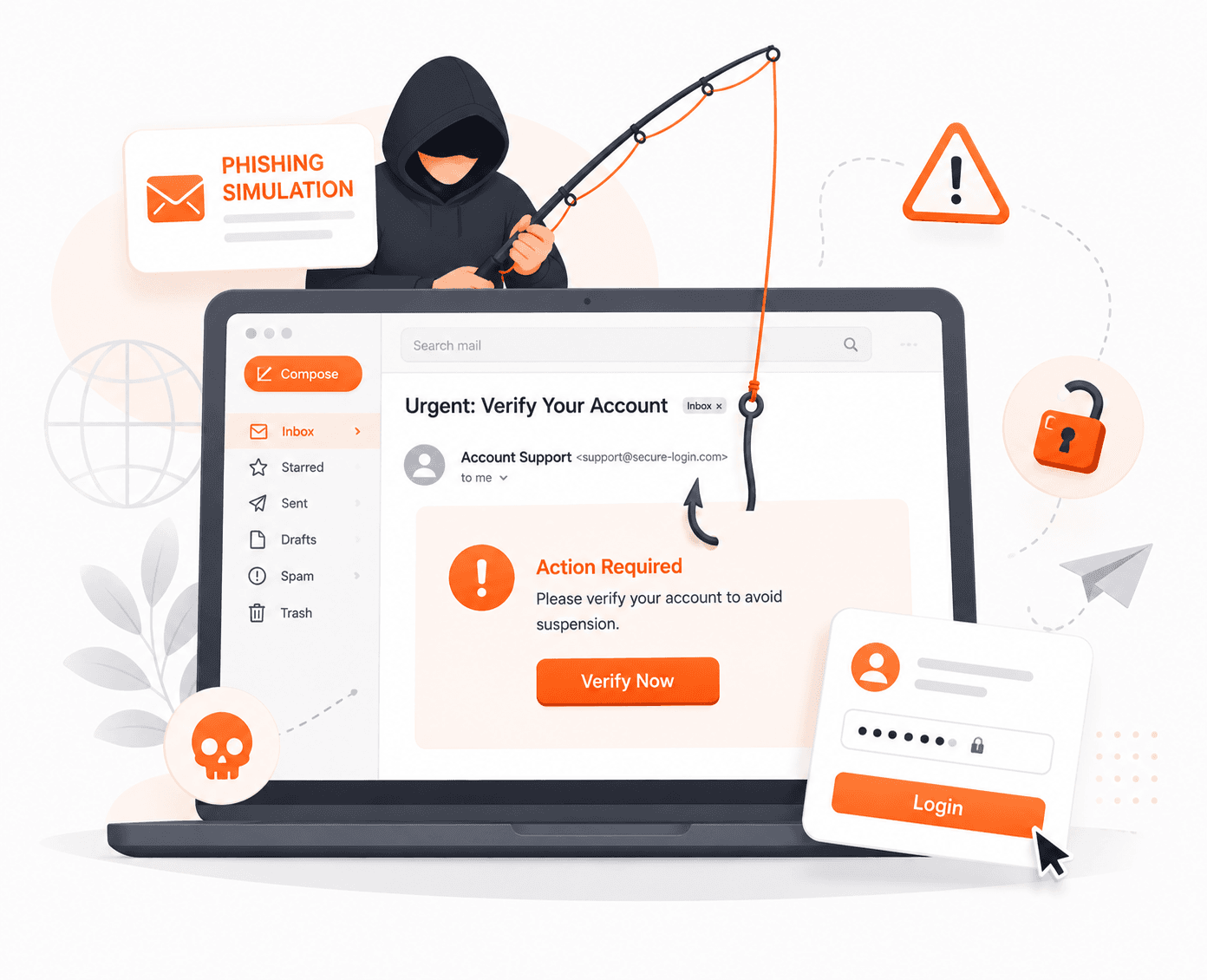
Human Risk Management Explained: How to Reduce Employee Cyber Risk in 2026 Human Risk Management (HRM) is the process of identifying, measuring, and reducing cybersecurity risks caused by human behavior. By combining security awareness training, phishing simulations, behavioral analytics, and continuous monitoring, organizations can proactively reduce the likelihood of employees becoming the entry point for cyberattacks. 1. Employees are involved in many successful cyberattacks, making human risk a critical security concern. 2. Human Risk Management goes beyond awareness training by measuring real employee behavior. 3. AI-powered phishing simulations and behavioral analytics help identify high-risk users. 4. Continuous education is more effective than annual compliance-based training. 5. Human Risk Intelligence enables security teams to prioritize interventions based on measurable risk. 6. A strong Human Risk Management program improves compliance, resilience, and organizational security culture. What Is Human Risk Management? Technology has become more secure over the years, but cybercriminals continue to succeed by targeting people rather than systems. Human Risk Management (HRM) is a cybersecurity strategy focused on understanding how employee actions influence an organization's overall security posture. Instead of assuming every employee presents the same level of risk, HRM evaluates individual and organizational behaviors to identify where additional education, guidance, or intervention is needed. Examples of risky behaviors include: - Clicking phishing links - Reusing passwords across accounts - Sharing sensitive information without verification - Ignoring software updates - Using unauthorized cloud applications - Connecting personal devices to corporate systems - Falling victim to social engineering tactics The goal of Human Risk Management is not to blame employees but to empower them with the knowledge, tools, and confidence to make secure decisions every day. Why Human Risk Is Increasing (H2) The cybersecurity landscape has evolved significantly over the past few years. Attackers now use artificial intelligence to craft highly personalized phishing emails, mimic writing styles, generate convincing fake websites, and even clone voices. At the same time, organizations have embraced hybrid work, cloud applications, and remote collaboration tools. While these technologies improve productivity, they also create more opportunities for attackers to exploit human behavior. Employees now manage multiple applications, receive hundreds of emails each week, and make countless security-related decisions every day. A single mistake—such as clicking a malicious attachment or approving a fraudulent payment request—can have significant financial and operational consequences. Rather than relying solely on firewalls, antivirus software, or endpoint protection, organizations must strengthen the human layer of security. Common Behaviors That Increase Cyber Risk (H2) Human Risk Management focuses on understanding the behaviors that most frequently contribute to security incidents. Clicking Suspicious Links Phishing remains one of the most effective attack methods because attackers exploit curiosity, urgency, and trust. Employees who click malicious links may unknowingly provide credentials or install malware. Weak Password Practices Using simple or reused passwords increases the likelihood of credential theft and unauthorized access. Strong password policies combined with password managers and multi-factor authentication significantly reduce this risk. Oversharing Information Employees sometimes share confidential information through email, messaging platforms, or social media without realizing the security implications. Even seemingly harmless details can help attackers build convincing phishing campaigns. Delayed Incident Reporting When employees hesitate to report suspicious emails or unusual activity, security teams lose valuable time to investigate and contain threats. Shadow IT Using unauthorized software or cloud services introduces unmanaged risks that may bypass organizational security controls. Recognizing these behaviors allows organizations to deliver targeted education instead of generic training. The Four Pillars of Human Risk Management (H2) A successful Human Risk Management strategy combines education, assessment, measurement, and continuous improvement. 1. Security Awareness Training Employees receive engaging, role-based learning that teaches them how to recognize modern cyber threats, understand organizational policies, and adopt secure behaviors. 2. Phishing Simulations Realistic phishing simulations measure how employees respond to suspicious emails in a controlled environment. The results help identify high-risk users and training opportunities. 3. Behavioral Analytics Behavioral analytics tracks learning completion, phishing performance, reporting habits, and other indicators to provide measurable insights into employee risk levels. 4. Continuous Reinforcement Cybersecurity is constantly evolving. Regular microlearning sessions, awareness campaigns, quizzes, and simulated attacks reinforce good habits throughout the year. Measuring Human Risk (H2) One of the biggest advantages of Human Risk Management is the ability to measure employee behavior using meaningful metrics rather than assumptions. Common metrics include: By monitoring these metrics over time, organizations can demonstrate measurable improvements and make informed decisions about future training initiatives. How AI Improves Human Risk Management (H2) Artificial intelligence is transforming the way organizations approach cybersecurity awareness. AI can: Generate realistic phishing scenarios tailored to different departments. Personalize learning paths based on employee performance. Identify behavioral trends and emerging risks. Recommend targeted microlearning content. Automate reporting and risk scoring. Predict which employees may require additional coaching. Instead of delivering identical training to everyone, AI enables organizations to provide the right learning experience to the right employee at the right time. Benefits of Human Risk Management (H2) Organizations that adopt a structured Human Risk Management program gain several long-term advantages. Stronger Security Culture Employees become active participants in protecting organizational assets rather than passive recipients of compliance training. Lower Phishing Success Rates Continuous education and simulations improve employees' ability to recognize malicious emails before they cause damage. Better Compliance Human Risk Management supports regulatory requirements by demonstrating ongoing employee education and measurable security improvements. Data-Driven Decision Making Behavioral analytics provide actionable insights that help security teams focus resources where they will have the greatest impact. Reduced Financial Risk Preventing even a single successful phishing attack or data breach can save organizations significant recovery costs, legal expenses, and reputational damage. Best Practices for Implementing Human Risk Management (H2) To maximize effectiveness, organizations should: Conduct a baseline human risk assessment. Deliver role-specific awareness training. Run phishing simulations regularly. Measure behavioral improvements over time. Provide immediate feedback after simulations. Reward positive security behaviors. Keep training short, engaging, and continuous. Review metrics regularly and adjust programs based on results. Human Risk Management should be viewed as an ongoing process rather than a one-time initiative. How Innvikta Helps Organizations Reduce Human Risk (H2) Innvikta's Human Risk Management approach combines AI-powered security awareness training, phishing simulations, and behavioral intelligence to help organizations build a stronger human firewall. With Innvikta, organizations can: Deliver engaging, role-based cybersecurity awareness programs. Simulate realistic phishing attacks across email and other communication channels. Measure employee risk through behavioral analytics and reporting dashboards. Identify high-risk users for targeted interventions. Track progress using actionable insights and executive reports. Continuously reinforce secure behaviors through personalized learning experiences. By combining education with measurable outcomes, Innvikta enables organizations to transform employees into one of their strongest cybersecurity defenses. Conclusion Cybersecurity is no longer just about protecting networks, devices, and applications—it is equally about protecting people. As attackers increasingly exploit human behavior, organizations must adopt a proactive approach to managing employee cyber risk. Human Risk Management provides the visibility, insights, and continuous improvement needed to reduce security incidents, strengthen compliance, and foster a lasting culture of cybersecurity awareness. Organizations that invest in continuous education, behavioral analytics, and AI-powered phishing simulations are better equipped to respond to today's evolving threat landscape and build long-term cyber resilience. Human Risk Management is a cybersecurity approach that measures and reduces risks associated with employee behavior through awareness training, phishing simulations, and behavioral analytics. Because attackers increasingly target people rather than technology, organizations need to understand and reduce human-related vulnerabilities to strengthen overall security. Security awareness training educates employees, while Human Risk Management combines education with continuous measurement, behavioral insights, and targeted risk reduction strategies. Yes. It supports compliance initiatives by demonstrating ongoing employee education, measurable improvements, and documented security awareness activities. AI enables personalized learning, intelligent phishing simulations, automated risk scoring, predictive analytics, and actionable recommendations that improve employee engagement and reduce cyber risk. | Feature | Innvikta InSAT | Others | | :--- | :---: | :---: | | Gamified Learning | Yes | No | | Phishing Simulations | Yes | Basic | | Custom Scenarios | Yes | Limited | Common metrics include: | Metric | Why It Matters | | --- | --- | | Phishing Click Rate | Measures susceptibility to phishing attacks | | Credential Submission Rate | Identifies employees at higher risk | | Email Reporting Rate | Indicates awareness and vigilance | | Training Completion | Tracks employee engagement | | Repeat Offender Rate | Highlights users needing additional support | | Department Risk Score | Helps prioritize targeted interventions |