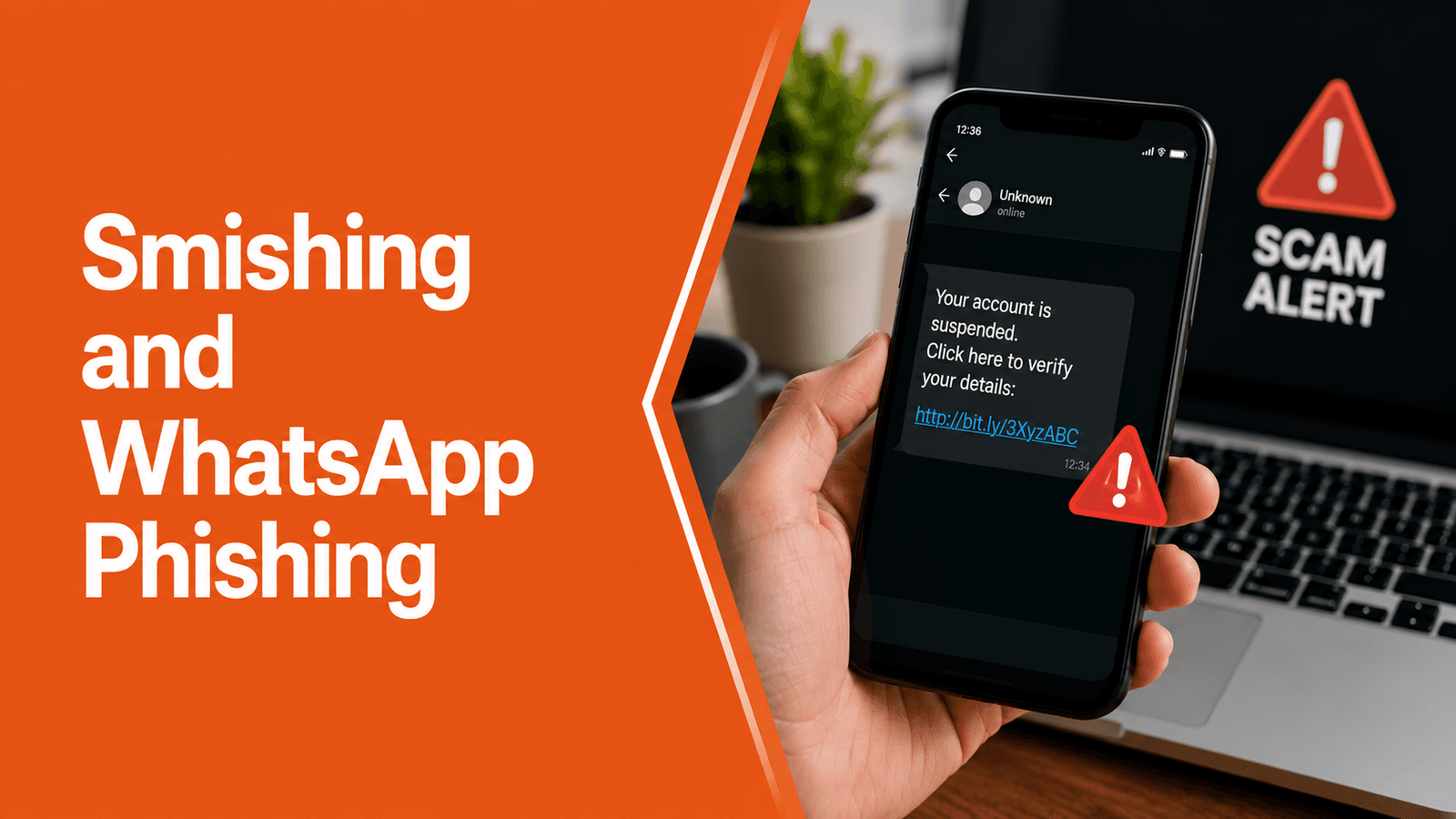
Smishing and WhatsApp Phishing

Team Innvikta
Published: 17 Jul 2026 • 05 Mins read
Smishing and WhatsApp Phishing: How to Spot, Prevent, and Report Mobile Messaging Scams
Smishing (SMS phishing) and WhatsApp phishing are social engineering attacks that trick people into clicking malicious links, sharing sensitive information, downloading malware, or making fraudulent payments through mobile messaging platforms. Because employees increasingly use smartphones for work, these attacks have become a significant cybersecurity risk. Security awareness training helps users recognize suspicious messages, verify requests, and report scams before they result in a security incident.
Key Takeaways
-
Mobile messaging has become one of the fastest-growing attack vectors for cybercriminals.
-
Smishing attacks are delivered through SMS, while WhatsApp phishing uses the WhatsApp platform.
-
AI-generated messages make scams more convincing than ever.
-
Employees should verify unexpected requests before taking action.
-
Organizations should include mobile messaging threats in their security awareness programs.
-
Continuous phishing simulations and mobile security training reduce human cyber risk.
Why Mobile Messaging Has Become a Favorite Target for Cybercriminals
Employees no longer work exclusively from laptops and desktops. Business communication now happens across smartphones, messaging apps, collaboration tools, and personal devices.
Cybercriminals have adapted accordingly.
Instead of relying only on email phishing, attackers now target users through:
-
SMS messages
-
WhatsApp
-
Business messaging apps
-
QR codes
-
Social media messaging
-
Collaboration platforms
Unlike email, mobile messages are often viewed immediately and users tend to trust them more. Small screens also make it harder to inspect URLs, verify sender details, or identify warning signs.
This combination of urgency, convenience, and trust makes mobile messaging an attractive attack vector.
What Is Smishing?
Smishing, short for SMS phishing, is a cyberattack delivered through text messages.
Attackers send fraudulent SMS messages designed to convince recipients to:
-
Click malicious links
-
Download malware
-
Share passwords or one-time passwords (OTPs)
-
Install fake applications
-
Provide banking information
-
Confirm account credentials
These messages often impersonate:
-
Banks
-
Courier companies
-
Government agencies
-
Telecom providers
-
HR departments
-
IT support teams
The objective is to create urgency so recipients act without verifying the request.
What Is WhatsApp Phishing?
WhatsApp phishing uses fake or compromised WhatsApp accounts to deceive users into revealing confidential information or performing unauthorized actions.
Attackers frequently impersonate:
-
Senior executives
-
Managers
-
HR representatives
-
Vendors
-
Customers
-
Family members
-
Friends
Because conversations appear to come from trusted contacts, recipients are more likely to respond quickly.
Common objectives include:
-
Stealing login credentials
-
Requesting urgent fund transfers
-
Collecting OTPs
-
Delivering malicious files
-
Distributing fake invoices
-
Redirecting users to credential harvesting websites
See Innvikta InSAT in Action
Explore how our interactive games, realistic phishing simulations, and gamified training modules dramatically reduce organizational human cyber risk.
Why Mobile Messaging Scams Are Increasing ?
Several trends have contributed to the rise of smishing and WhatsApp phishing.
AI Makes Messages More Convincing
Generative AI enables attackers to produce well-written messages with fewer grammatical errors, personalized details, and realistic business language.
Hybrid Work Environments
Employees often receive business-related messages outside traditional office hours, making unexpected communication seem normal.
Widespread Smartphone Usage
Most employees keep their smartphones within reach throughout the day, increasing the likelihood that malicious messages are opened immediately.
Trust in Familiar Platforms
Messaging apps are generally perceived as more personal than email, making users less suspicious of requests received through them.
Common Smishing and WhatsApp Scam Techniques
Fake Delivery Notifications
Messages claim that a parcel cannot be delivered unless the recipient clicks a tracking link or pays a small fee.
Banking Verification Scams
Attackers pretend to be financial institutions requesting account verification or warning about suspicious transactions.
Executive Impersonation
An attacker poses as a company executive requesting an urgent payment, confidential document, or gift card purchase.
QR Code Scams
Recipients are encouraged to scan a QR code that directs them to a fraudulent login page or malicious website.
Fake Job Offers
Messages advertise attractive employment opportunities and request personal information or advance payments.
WhatsApp Account Takeover
Victims are tricked into sharing verification codes that allow attackers to register the victim's WhatsApp account on another device.
Investment and Cryptocurrency Fraud
Attackers promise unrealistic returns through fake investment groups or cryptocurrency opportunities.
Customer Support Impersonation
Fraudsters claim to represent banks, e-commerce companies, or technology providers and ask users to verify credentials or install remote access applications.
Warning Signs Employees Should Never Ignore
Employees should pause and verify any message that includes:
-
Unexpected urgency.
-
Requests for passwords or OTPs.
-
Links from unfamiliar domains.
-
Requests for confidential business information.
-
Payment requests outside normal approval processes.
-
Unexpected QR codes.
-
Messages from unknown numbers claiming to be executives.
-
Poor branding or unusual formatting.
-
Requests to bypass company procedures.
-
Offers that appear too good to be true.
When in doubt, verify the request through a trusted communication channel before taking action.
Best Practices to Prevent Smishing and WhatsApp Phishing
Verify Before You Trust
Never assume a message is legitimate because it appears to come from a familiar platform.
If the request is unusual, contact the sender using an independently verified phone number or official communication channel.
Never Share OTPs or Passwords
Legitimate organizations will not ask employees to share passwords, authentication codes, or recovery codes through SMS or WhatsApp.
Avoid Clicking Unknown Links
Instead of using links received in messages, navigate directly to the organization's official website or application.
Review URLs Carefully
Mobile browsers often hide portions of URLs.
Expand links when possible and confirm the domain before entering credentials.
Keep Devices Updated
Install security updates promptly to reduce exposure to known vulnerabilities.
Enable Multi-Factor Authentication (MFA)
MFA provides an additional layer of protection if credentials are compromised.
Report Suspicious Messages
Employees should report suspected phishing attempts to their IT or security team, even if they did not interact with the message.
Early reporting helps protect the rest of the organization.
Building a Mobile-First Security Culture
Cybersecurity awareness should extend beyond email.
Organizations should regularly educate employees about:
-
SMS phishing
-
WhatsApp scams
-
QR code phishing (Quishing)
-
Mobile malware
-
Social engineering
-
Secure mobile device usage
-
Business communication verification
Practical simulations are particularly effective because they expose employees to realistic attack scenarios without putting organizational data at risk.
How Innvikta Helps Organizations Defend Against Mobile Phishing ?
Mobile messaging attacks evolve rapidly, which means employee education must evolve as well.
Innvikta's Security Awareness Platform helps organizations reduce mobile phishing risks through continuous, practical learning.
AI-Powered Phishing Simulations
Simulate realistic SMS, WhatsApp, and phishing campaigns to evaluate employee readiness and identify behavioral risks.
Mobile Security Awareness Training
Interactive modules cover:
-
Smishing
-
WhatsApp phishing
-
QR phishing (Quishing)
-
Mobile malware
-
Social engineering
-
Secure communication practices
-
Remote work security
Human Risk Intelligence
Behavioral analytics help organizations identify departments and individuals who may require additional coaching based on simulation performance.
Continuous Microlearning
Short, engaging awareness content reinforces secure behaviors throughout the year, improving knowledge retention without disrupting productivity.
Executive Dashboards
Security leaders receive insights into employee engagement, reporting behavior, phishing resilience, and human risk trends.
By combining AI-powered simulations, behavioral analytics, and mobile security awareness, Innvikta helps organizations strengthen their defenses against evolving messaging-based cyber threats.
Conclusion
Smishing and WhatsApp phishing have become some of the fastest-growing cyber threats because they exploit trust, urgency, and the widespread use of mobile devices.
As organizations embrace hybrid work and mobile-first communication, employees need the knowledge and confidence to recognize suspicious messages before attackers achieve their objectives.
Technology remains essential, but informed employees provide an additional layer of defense that technology alone cannot replace.
Continuous security awareness training, realistic phishing simulations, and a culture of verification enable organizations to reduce human risk and improve resilience against mobile messaging attacks.
Frequently Asked Questions
Smishing uses SMS text messages to deceive victims, while WhatsApp phishing uses WhatsApp conversations, fake accounts, or compromised accounts to conduct similar attacks.
Greater smartphone usage, hybrid work, AI-generated scams, and increased trust in messaging platforms have made mobile attacks more effective for cybercriminals.
Yes. Employees can reduce risk by verifying unusual requests, avoiding suspicious links, never sharing OTPs, enabling MFA, and reporting suspicious messages.
Training teaches employees how to identify social engineering tactics, verify requests, recognize warning signs, and respond appropriately to suspicious messages.
Innvikta provides AI-powered phishing simulations, mobile security awareness training, Human Risk Intelligence, behavioral analytics, and continuous microlearning to help organizations reduce human-related cyber risks.